CFO Insights - Finance, M&A & Capital Markets
Perspectives on capital allocation, M&A, fractional CFO strategy, and financial leadership for business owners and institutional investors.
Gregg Carlson is a CPA and CFA Institute member with 25+ years of CFO, Controller and financial analyst leadership across public companies, cannabis operators, gaming and hospitality businesses, and institutional investors. He has closed $700M+ in transactions. These articles apply that experience to the financial decisions founders, operators, and investors face.
To discuss a specific situation: gregg@gregg-carlson.com
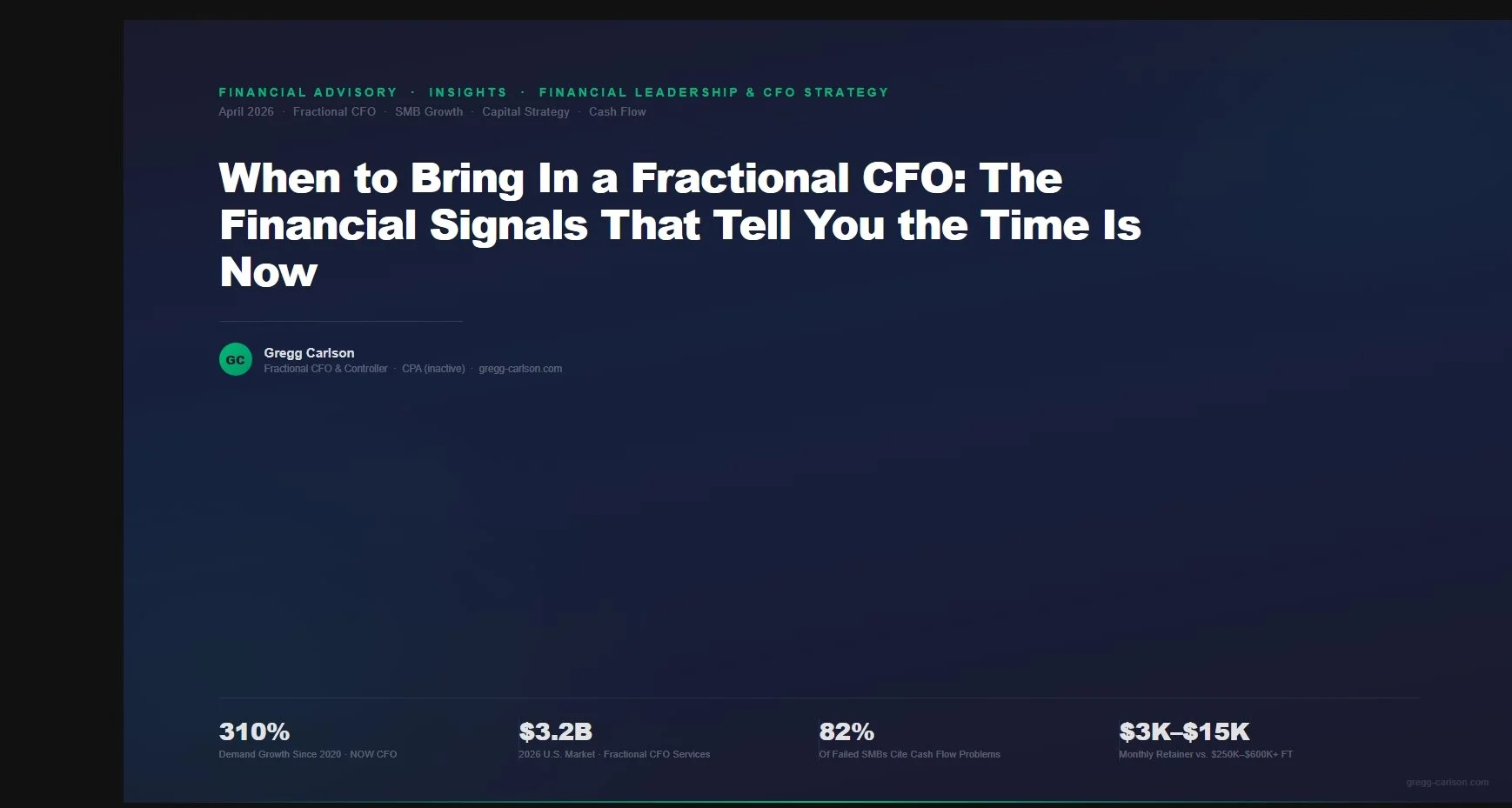
When to Bring In a Fractional CFO: The Financial Signals That Tell You the Time Is Now
Most business owners bring in a fractional CFO too late — after a cash crisis, a failed capital raise, or a deal that fell apart in diligence — rather than before any of those events occur. The twelve signals in this article are designed to help identify the need earlier.
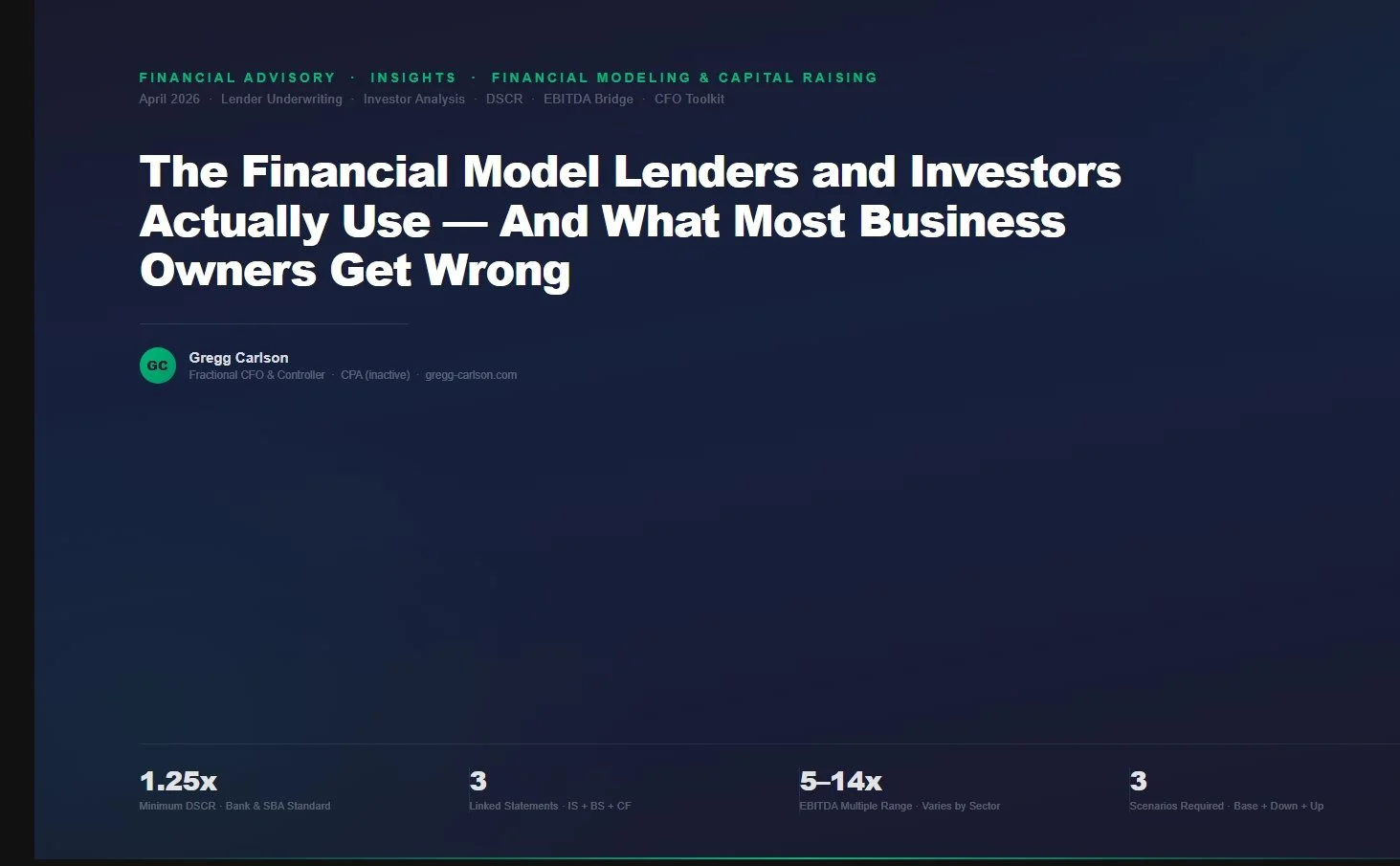
The Financial Model Lenders and Investors Actually Use — And What Most Business Owners Get Wrong
Most business owners who have never raised capital professionally do not know what a lender or investor actually does with the financial information they receive. Understanding that analytical process is the difference between a fundable business and one that gets passed over.
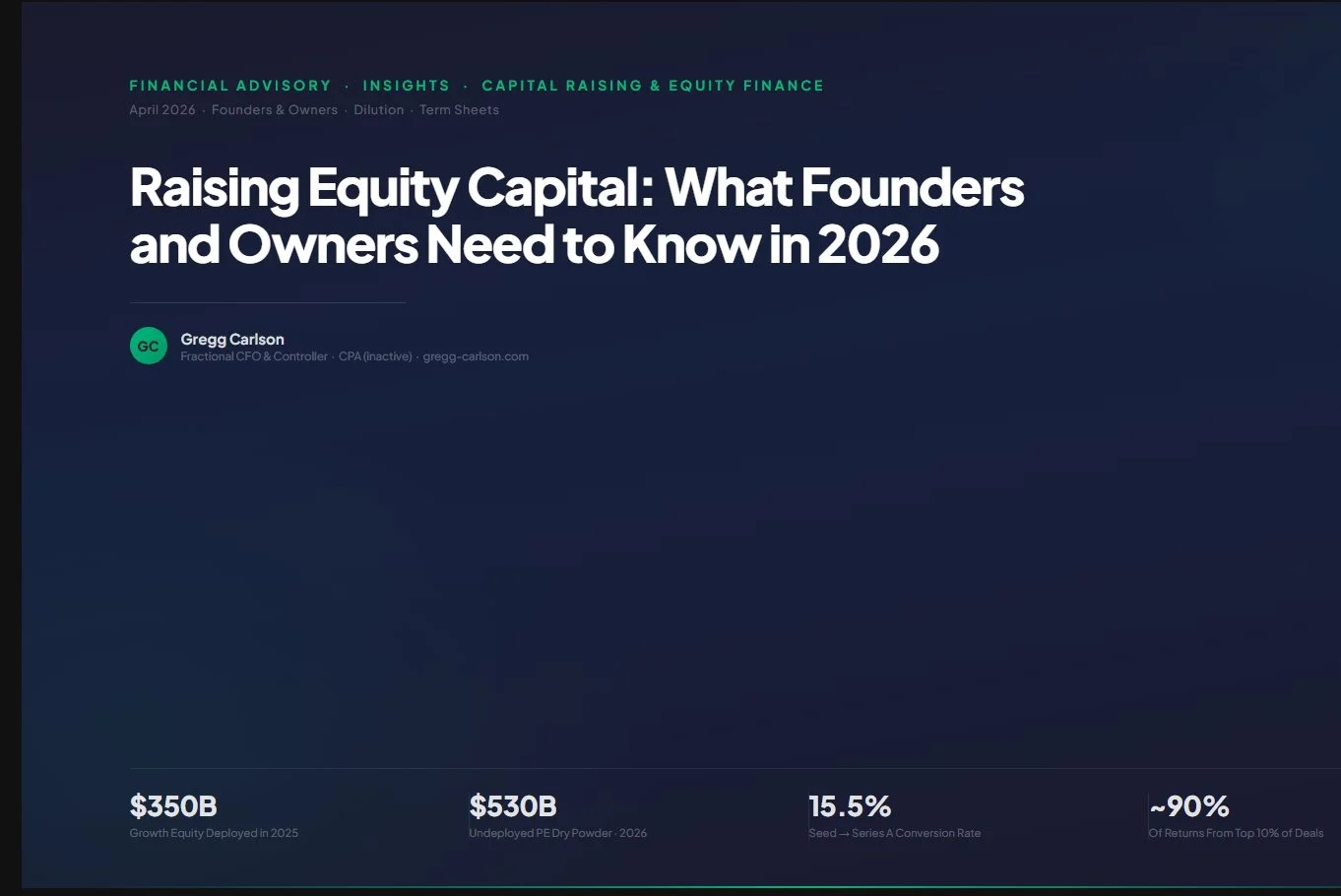
Raising Equity Capital: What Founders and Owners Need to Know in 2026
Equity capital is the most expensive form of financing measured in permanent ownership dilution. Every percentage point you give up is permanently gone unless you buy it back at a higher price later.
The most common mistake founders make is negotiating valuation hard and terms lightly. The terms — liquidation preferences, anti-dilution provisions, board composition, protective provisions — determine your actual economic outcome far more than the headline pre-money figure.
What Andy Jassy's 2025 Shareholder Letter Tells Every Business Operator About AI, Capital, and Long-Duration Thinking
Andy Jassy's 2025 letter is not primarily a shareholder communication. It is a capital allocation philosophy, a competitive strategy memo, and a treatise on long-duration thinking — all wrapped in annual report format. The lessons it contains apply to any business at any scale.
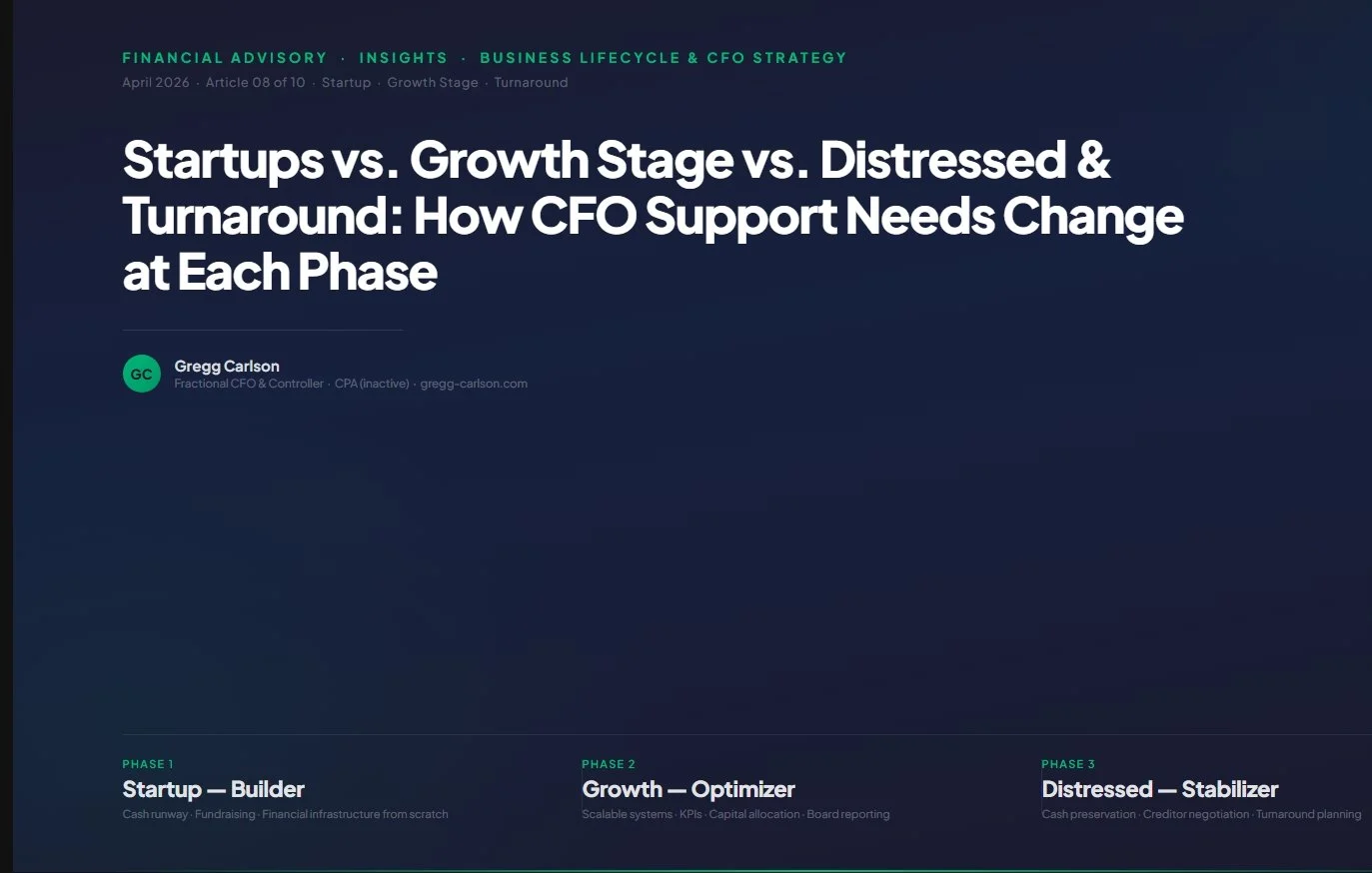
Startups vs. Growth Stage vs. Distressed & Turnaround: How CFO Support Needs Change at Each Phase
The CFO role is not one job — it is fundamentally different at each stage of the business lifecycle. What a startup needs from its CFO has almost nothing in common with what a distressed company needs. Mismatching CFO capability to business stage is one of the most expensive leadership mistakes a company can make.
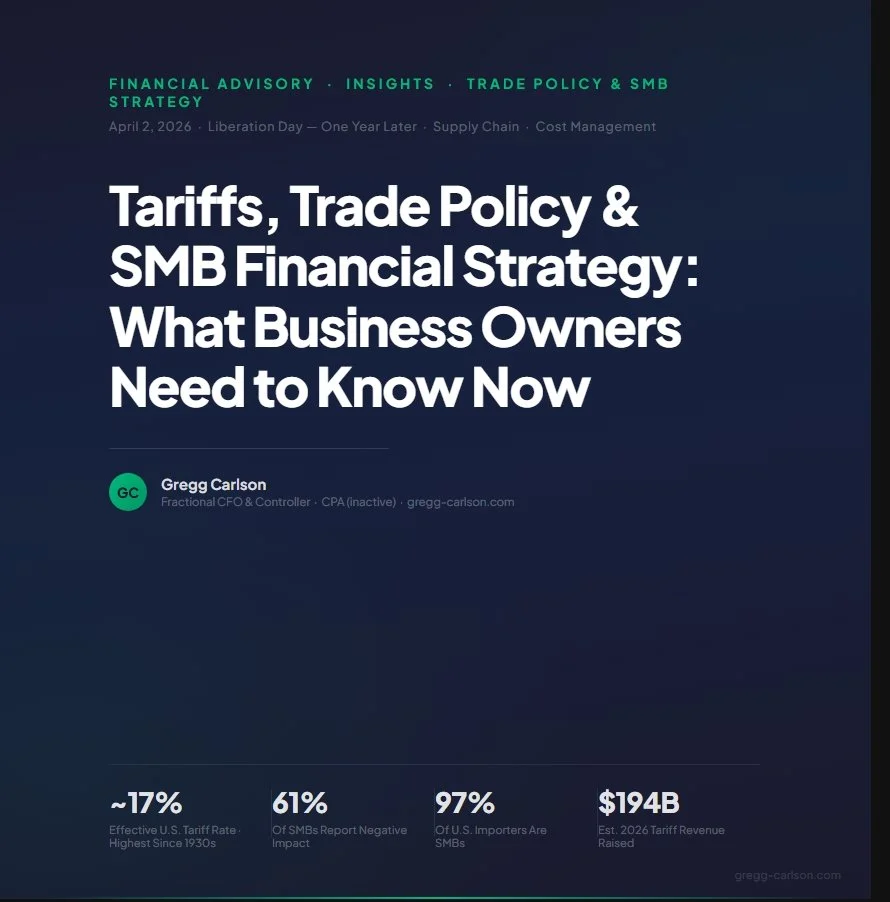
Tariffs, Trade Policy & SMB Financial Strategy: What Business Owners Need to Know Now
One year after Liberation Day, the U.S. effective tariff rate is approximately 17% — the highest since the 1930s — even after the Supreme Court struck down the IEEPA-based reciprocal tariffs in February 2026. A replacement 10% global tariff under Section 122 is now in effect.
The Cloud Supercycle: What It Means for Investors and Business Operators
The five largest hyperscalers are projected to spend $660–$700 billion on capex in 2026 — the largest infrastructure investment cycle in technology history. What it means for your portfolio and your business.
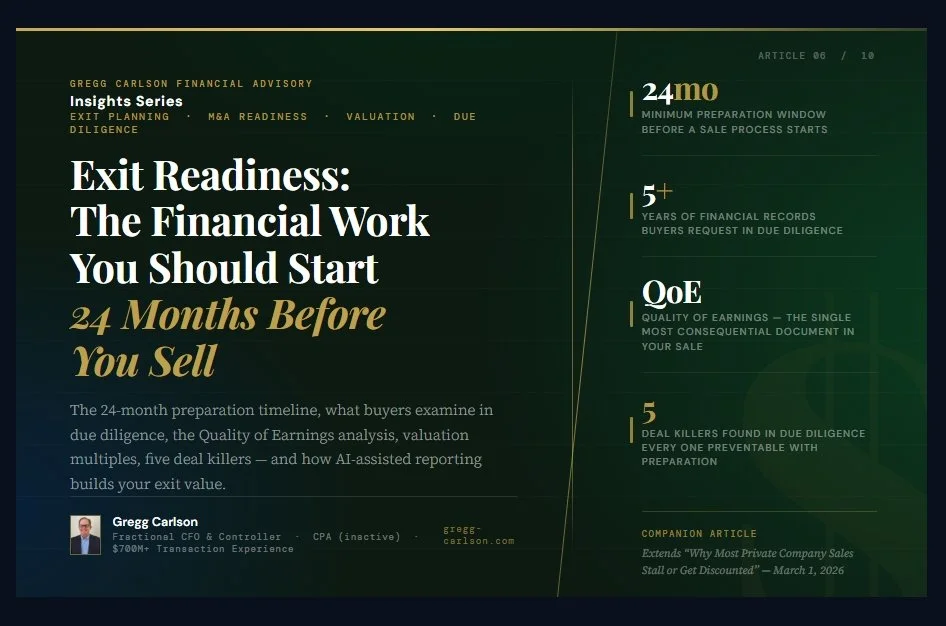
Exit Readiness: The Financial Work You Should Start 24 Months Before You Sell
The 24-month preparation timeline, what buyers examine in due diligence, the Quality of Earnings analysis, valuation multiples, five deal killers — and how AI-assisted reporting builds your exit value.
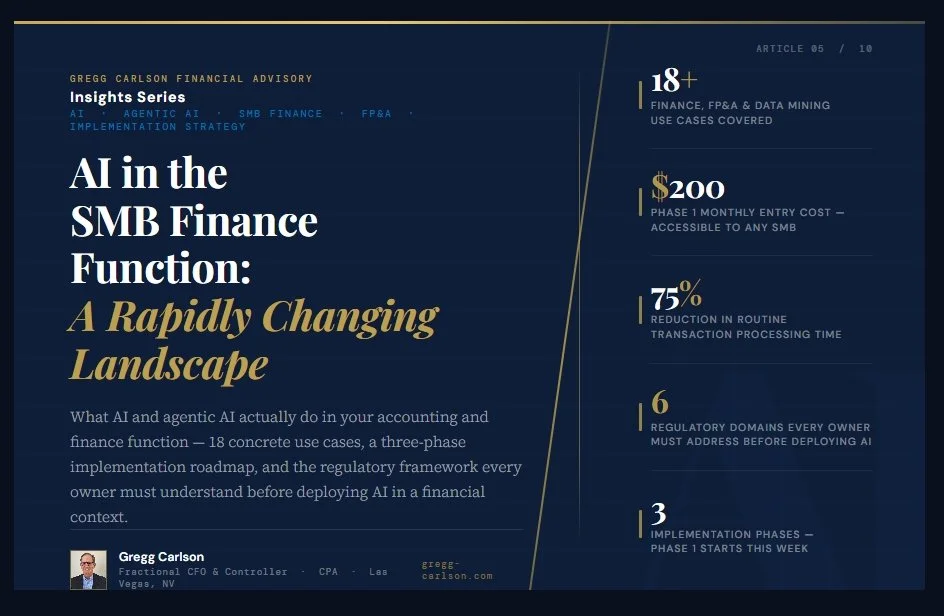
AI in the Small to Medium Business (SMB) Finance Function
What AI and agentic AI actually do in your accounting and finance function — 18 concrete use cases, a three-phase implementation roadmap, and the regulatory framework every owner must understand before deploying AI in a financial context.
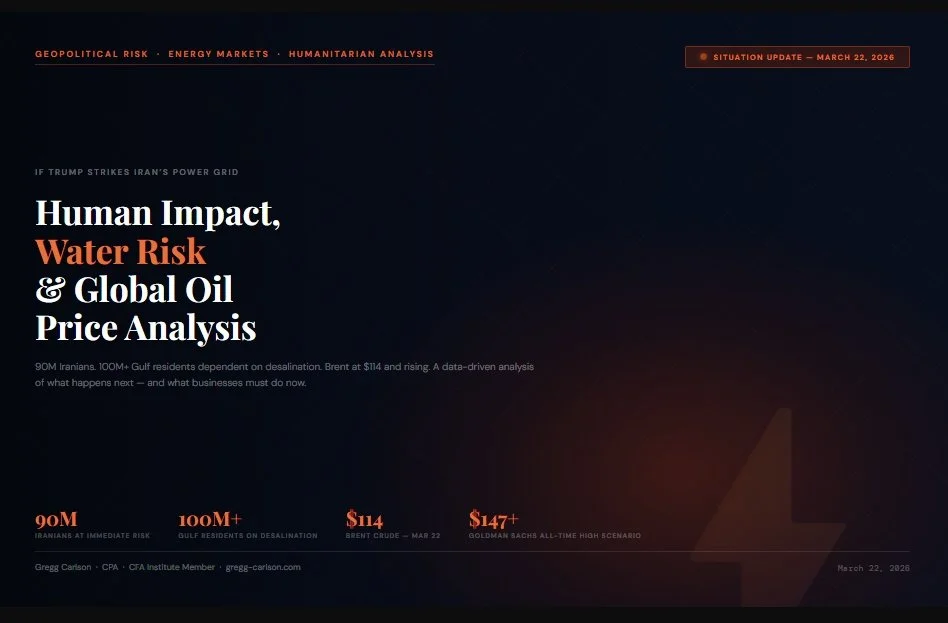
If Trump Strikes Iran’s Power Grid: Human Impact, Water Risk & Global Oil Price Analysis
90M Iranians. 100M+ Gulf residents dependent on desalination. Brent at $114 and rising. A data-driven analysis of what happens next — and what businesses must do now.
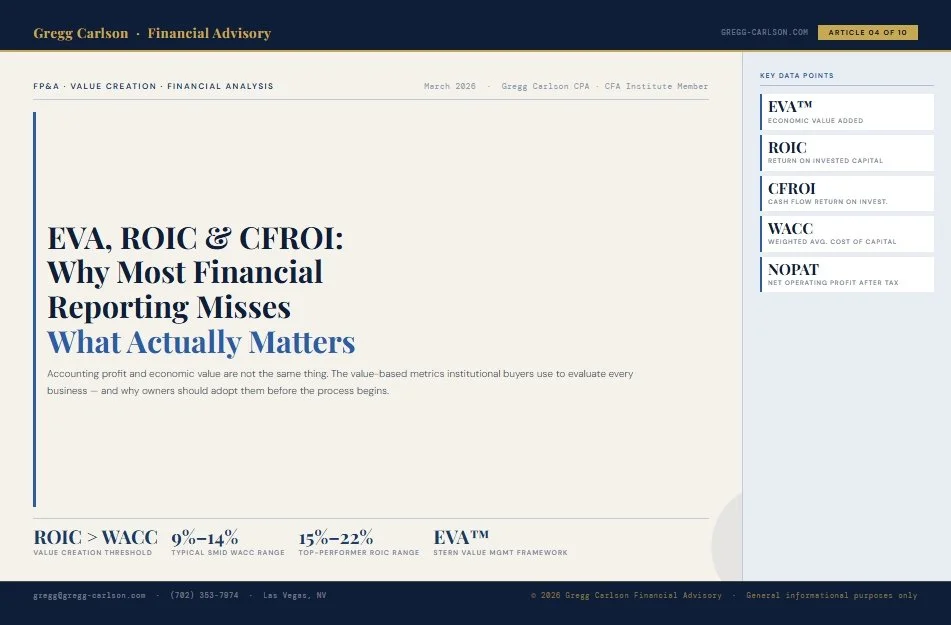
EVA, ROIC, and CFROI: Why Most Small Business Financial Reporting Misses What Actually Matters
Accounting profit and economic value are not the same thing. The value-based metrics institutional buyers use to evaluate every business — and why owners should adopt them before the process begins.
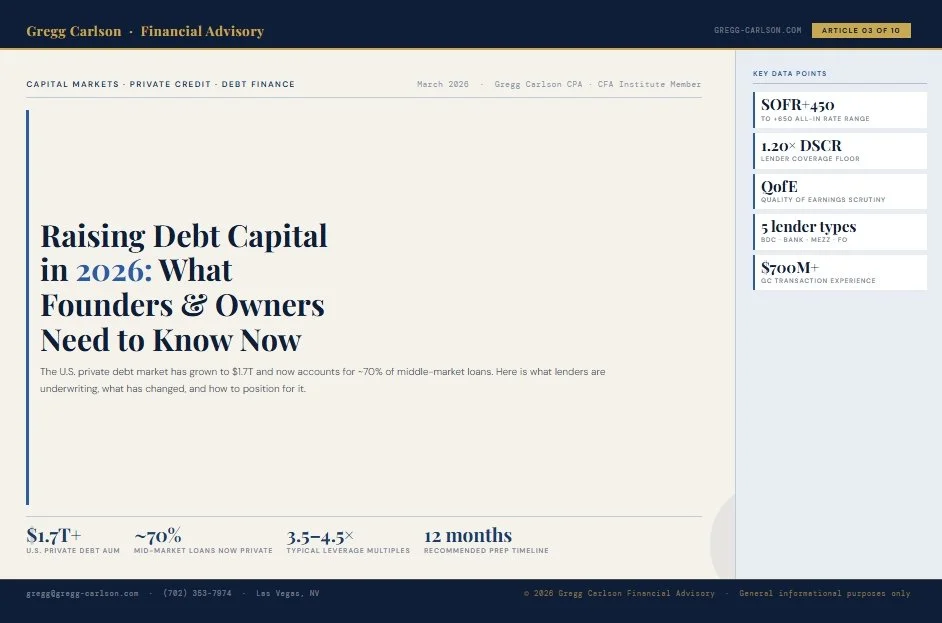
Raising Debt Capital in 2026: What Founders and Business Owners Need to Know Now
The U.S. private debt market has grown to $1.7T and now accounts for ~70% of middle-market loans. Here is what lenders are underwriting, what has changed, and how to position for it.
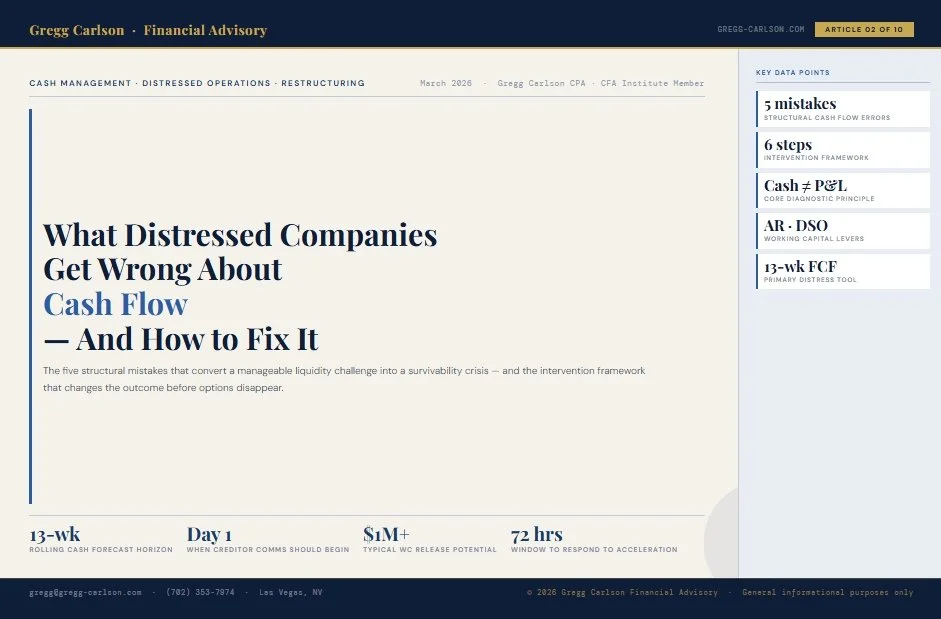
What Distressed Companies Get Wrong About Cash Flow — And How to Fix It
The five structural mistakes that convert a manageable liquidity challenge into a survivability crisis — and the intervention framework that changes the outcome before options disappear.
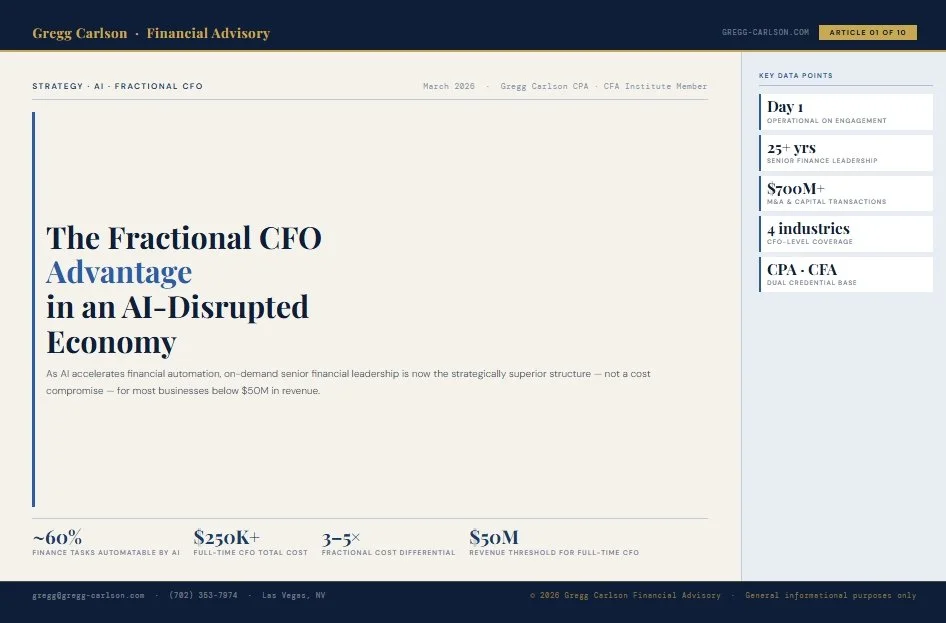
The Fractional CFO Advantage in an AI-Disrupted Economy
As AI accelerates financial automation, on-demand senior financial leadership is now the strategically superior structure — not a cost compromise — for most businesses below $50M in revenue.
Navigating AI Disruption: A Strategic Guide for SMID Businesses, 2026–2028
SMID specific AI exposure: Where risk is concentrated.
The Cash Conversion Cycle: The Working Capital Discipline That Funds Both Stability and Growth
SMIDs consistently underestimate how much capital is trapped inside their operations. Releasing it may be the most powerful growth-financing tool available—and it costs nothing to borrow.
Why Most Private Company Sales Stall or Get Discounted — And How to Make Sure Yours Does Not
Lessons from 20+ years on the sell-side as a Fractional and Interim CFO. The difference between your headline price and what you actually deposit is rarely the deal - it is the preparation.
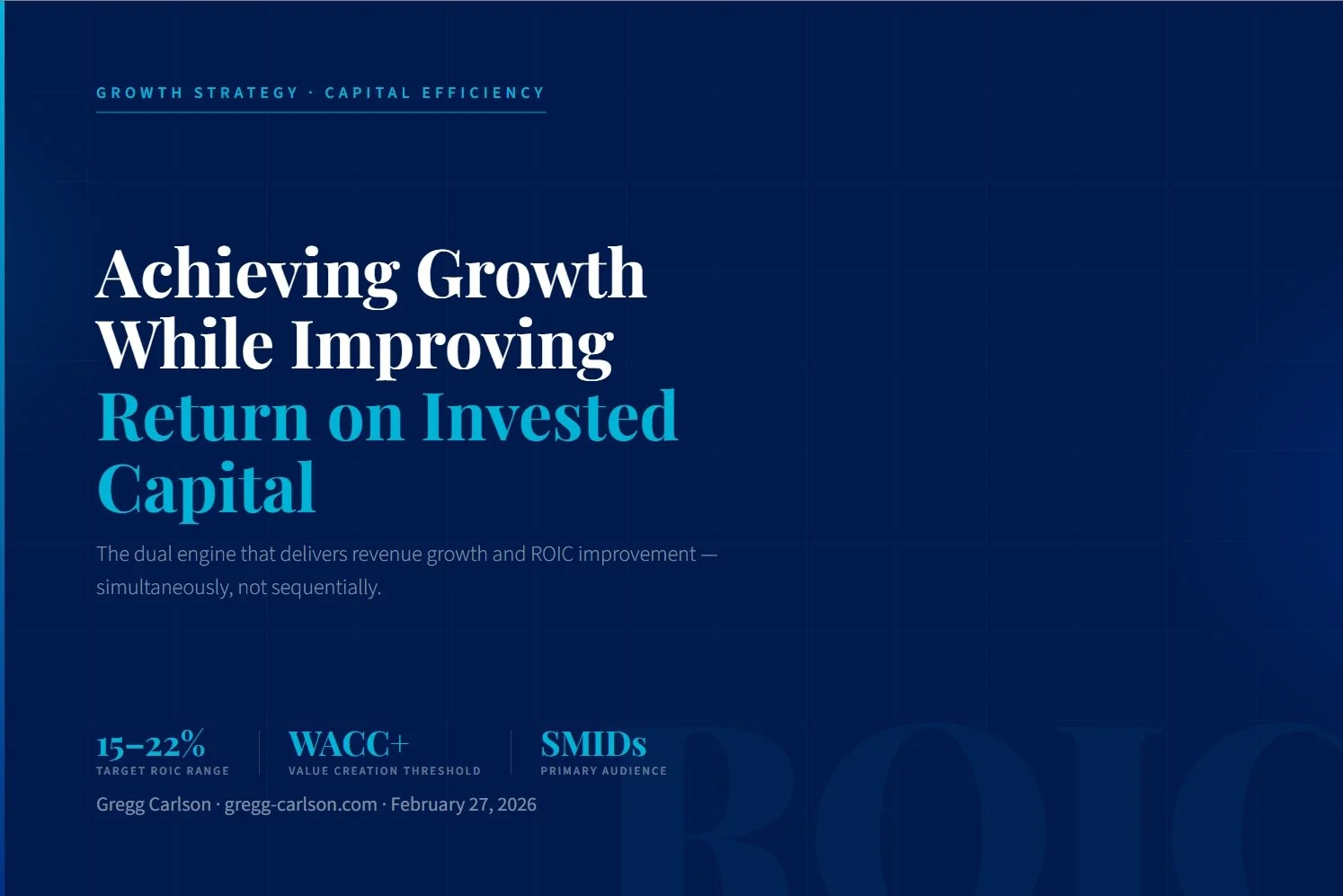
How Small and Mid-Size Companies Can Achieve Growth While Improving Return on Invested Capital
Most SMIDs pursue growth or efficiency—the highest-performing companies pursue both simultaneously. Here's how to build the dual engine that delivers revenue growth and ROIC improvement.